
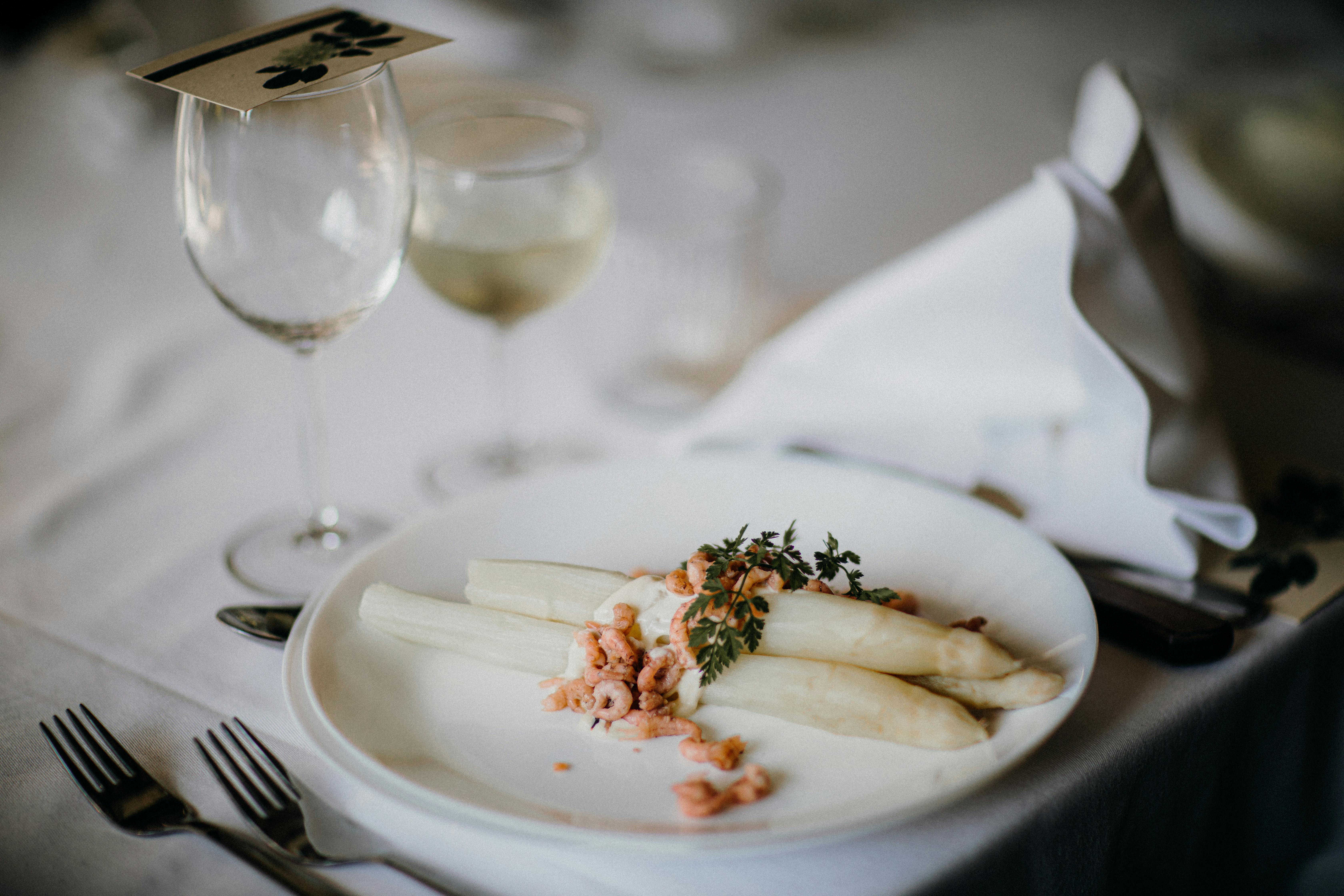
For several weeks each spring, restaurants across large parts of central Europe replace much of their menu with variations on a single vegetable. The reason is a narrow harvest window and rapid deterioration.
The harvest window is genuinely short
White asparagus is cut from raised earth ridges before the spear breaks the surface, since exposure to light turns it green and changes its flavour.
Cutting begins when soil temperature is high enough for growth and ends by tradition in early summer, allowing the plants to build reserves for the following year.
That end date is not arbitrary. Continuing to cut would weaken the crowns, which take years to establish and are expected to produce for a decade or more.
Quality falls quickly after cutting
Cut spears lose moisture and begin converting sugars, so freshness is measured in days rather than weeks even under refrigeration.
The practical test used at markets is a squeaking sound when spears are rubbed together and a moist, freshly cut base rather than a dried one.
Because quality degrades so fast, the supply chain stays short, and restaurants often buy from growers within a limited radius.
Labour makes it expensive
Harvesting requires cutting each spear individually by hand beneath the soil surface without damaging neighbouring shoots, and the field is worked repeatedly.
That labour intensity, concentrated into a few weeks, is the main component of the price, which is why the vegetable sits at a premium despite being locally grown.
Peeling adds another step, since the outer layer is fibrous and must be removed along most of the spear's length.
Restaurants respond with temporary menus
A dedicated seasonal card allows a kitchen to buy in volume, prepare in batch and turn stock over fast enough that nothing sits.
The classic preparations are deliberately simple, because the point is the vegetable itself rather than a sauce or a technique competing with it.
Once the season closes, the menu reverts, and the same restaurant may not serve asparagus again until the following spring.
Regional identity reinforces the pattern
Growing areas with sandy soils have built local reputations, and many run marked routes, markets and festivals during the season.
That connection between a crop and a region gives restaurants a reason to state provenance on the menu, which they rarely do for other vegetables.
Travelling during those weeks means encountering the same ingredient repeatedly, which is either the reason for the trip or something to plan around.