
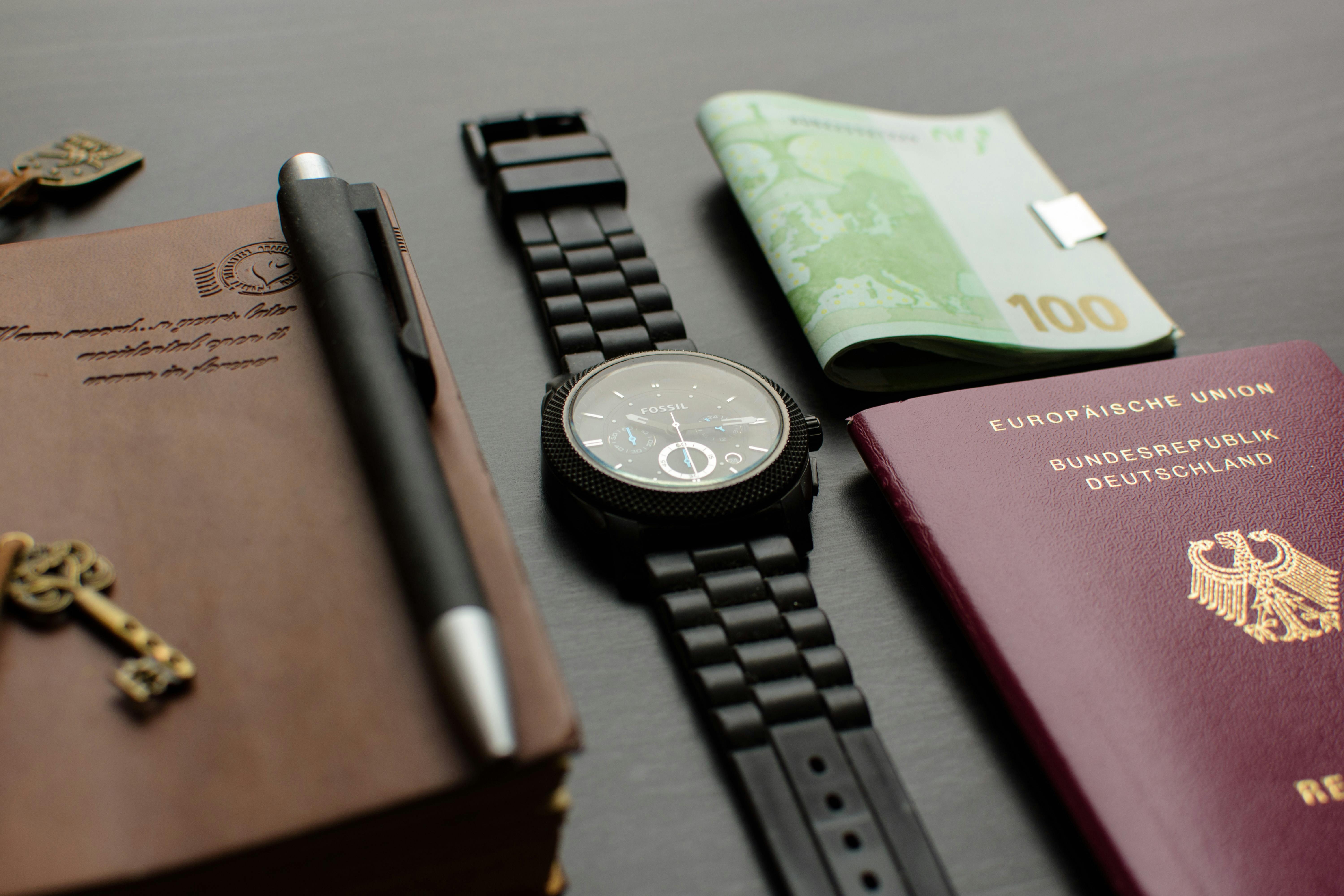
The rate offered for banknotes at an exchange counter is consistently less favourable than the rate applied to a card transaction. The difference reflects what handling physical cash actually involves.
The reference rate is not available to anyone
Published mid-market rates sit halfway between what buyers and sellers are quoting in wholesale markets, and no retail customer transacts at that midpoint.
Every provider quotes a buying rate below it and a selling rate above it, and the gap between them is the spread that funds the service.
Comparing offers therefore means comparing spreads against the same reference, not comparing headline rates against each other.
Banknotes are inventory
A bureau must hold physical notes in every currency it offers, in useful denominations, before any customer arrives.
That stock is capital sitting idle, exposed to rate movements, and it must be insured, stored securely and transported by specialist carriers.
None of those costs apply to an electronic transaction, which is why the same currency pair carries a wider spread in cash form.
Imbalance drives rates apart
A counter in a destination receives far more of one currency than it needs and runs short of another, so surplus notes must be repatriated at a cost.
Rates are adjusted to discourage the direction that creates the surplus and encourage the one that relieves it, which is why the two sides of a quote are rarely symmetrical.
Minor currencies show this most strongly, since the volumes are small and the logistics of moving the notes are proportionally more expensive.
Location changes the quote more than the currency does
Counters at airports and border crossings serve customers with limited alternatives and short time horizons, and spreads there reflect that position.
The same operator may quote differently at a city branch, because the competitive situation rather than the underlying cost has changed.
Commission-free advertising does not indicate a better deal, since the margin can be taken entirely within the spread without any separate fee.
Where cash still has a role
Card acceptance varies widely between countries and between businesses, and some transport, market and rural settings remain cash-only in practice.
Holding a modest amount for arrival and obtaining the rest locally is a common approach, balancing convenience against the cost of exchanging in advance.
How much to carry is a personal judgement involving security and local conditions rather than a calculation with a single correct answer.