
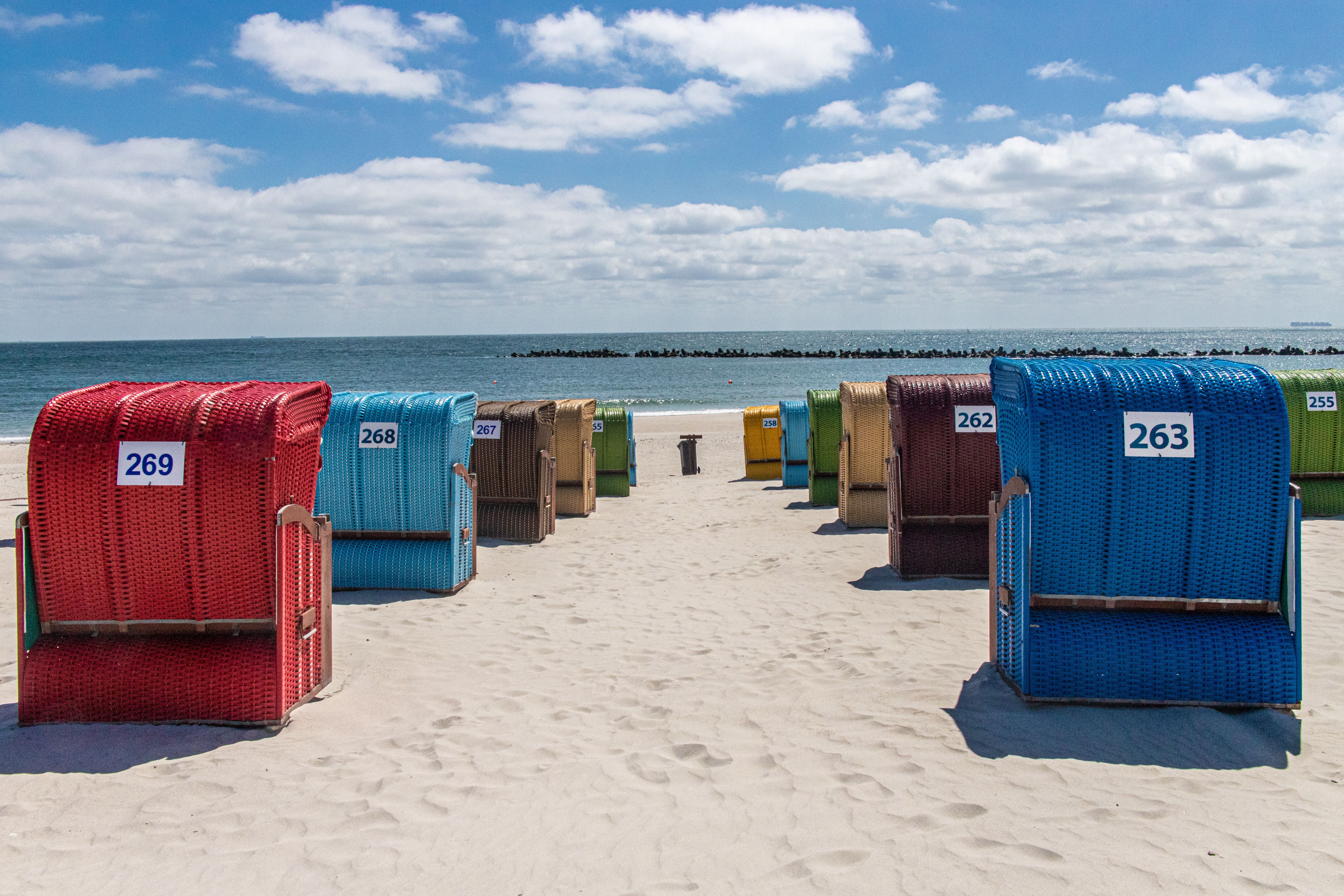
On parts of the North Sea coast the water withdraws far enough to walk out on the seabed, then returns hours later. The mechanism is tidal range acting on an extremely flat shore.
Range and gradient work together
Tidal range is the vertical difference between high and low water. On a steep coast that vertical change moves the waterline only a short horizontal distance.
Where the seabed slopes very gently, the same vertical change sweeps the waterline across a vast horizontal distance, which is why the effect is dramatic here and invisible elsewhere.
The shallow, funnel-shaped basin amplifies the range as the tide is squeezed towards the coast, so both factors reinforce each other on the same shore.
The exposed ground is a living habitat
What appears at low water is not bare sand but a dense ecosystem of worms, shellfish and microscopic algae supported by nutrients the tide delivers twice daily.
That productivity is why enormous numbers of migratory birds stop here to feed, timing their movements to the season rather than to the hour.
Large parts of the area are protected accordingly, with zones where access is restricted or seasonal to keep disturbance away from feeding and breeding grounds.
Walking out requires timing, not fitness
The returning tide does not advance evenly. It fills channels first and can cut off a route back long before the walker's own position is underwater.
Those channels are invisible from the shore, which is why guided walks follow specific lines and turn back at a set time rather than at a set distance.
Fog is the second factor, since it removes the landmarks used for orientation on ground with no fixed features. Both risks are about navigation rather than depth.
Why the timetable shifts every day
Tides follow the moon rather than the sun, so high water arrives roughly fifty minutes later each day and the usable window drifts steadily through the calendar.
Ranges also vary through the lunar month, with the largest ranges around new and full moon and the smallest between them.
Local tide tables are therefore posted everywhere along the coast, and planning a beach day here means reading them the way a mountain day means reading a forecast.
What this does to a beach holiday
Swimming is possible for a limited part of the day, which reshapes the rhythm of a stay around the water rather than around the clock.
Many resorts respond with heated seawater pools and sheltered promenades so that the hours without water still have a purpose.
Visitors expecting a Mediterranean pattern are frequently surprised. Understanding the tide before booking turns the constraint into the reason for coming rather than a disappointment.