
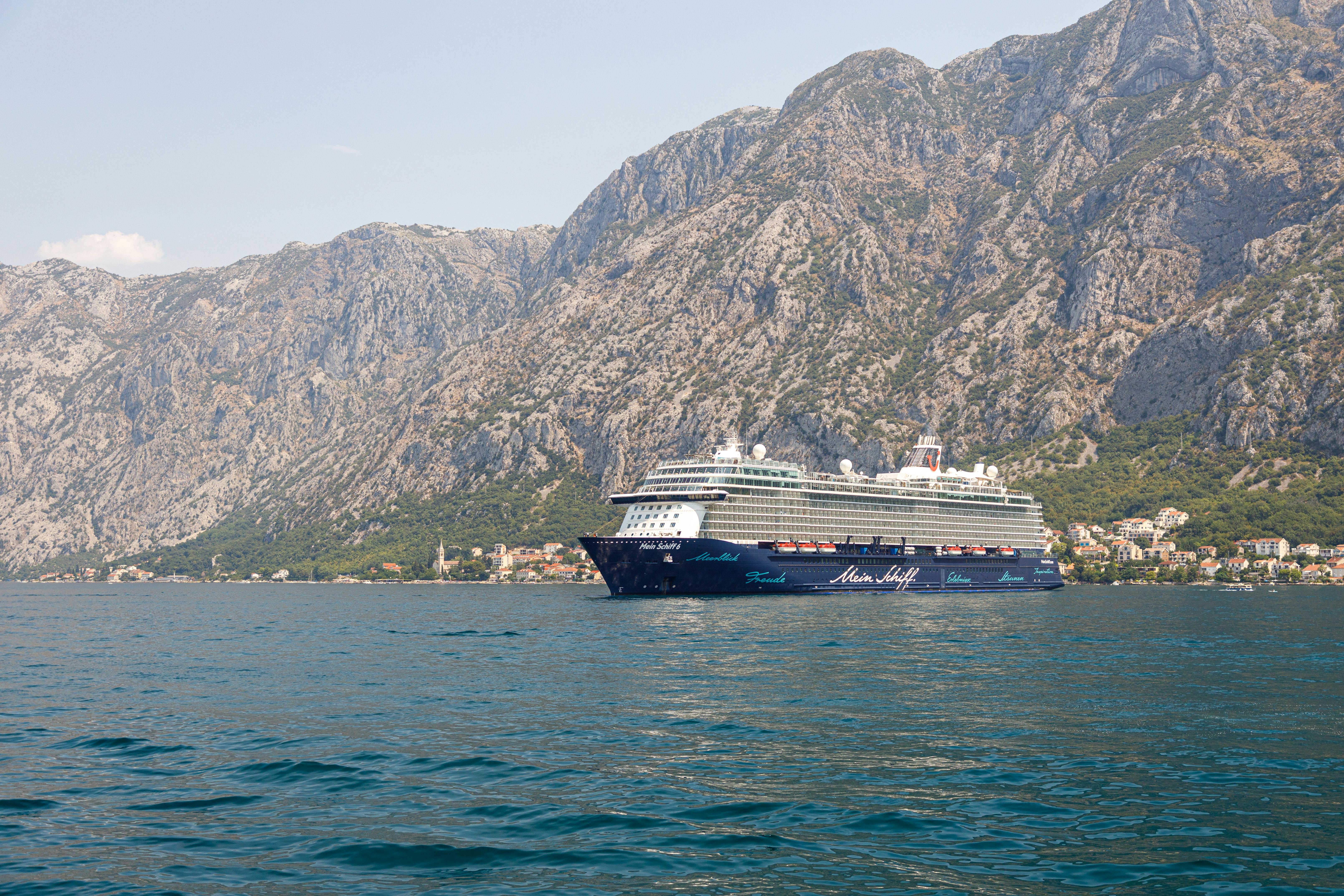
At some ports a cruise ship ties up alongside a pier and passengers walk off. At others the ship anchors offshore and everyone goes ashore in small boats. The difference is physical, not discretionary.
Depth alongside decides everything
A large cruise hull draws a substantial amount of water, and that depth has to exist not only at the berth but along the whole approach channel at the lowest tide of the day.
Many attractive destinations are old fishing or trading harbors dredged for far smaller vessels. Deepening them means capital dredging, spoil disposal and continuing maintenance dredging against silt.
Where the seabed is coral or rock, dredging may be environmentally prohibited or simply impossible at reasonable cost, which fixes the port as a tender port indefinitely.
Pier length and fendering matter too
Even with depth, a pier must be long enough to take the hull and strong enough to absorb the loads a ship of that windage puts on its lines and fenders.
A cruise ship presents an enormous flat side to the wind, so mooring loads are large. Piers built for cargo ships of an earlier generation often cannot take them without reconstruction.
Shoreside services compound the problem. A berth needs gangway towers, waste reception, potable water and increasingly shore power connections, none of which a legacy pier has.
How tendering actually works
The ship anchors in a designated anchorage, and either its own lifeboats or contracted local craft run a shuttle. Tickets are usually issued to meter the flow onto the boats.
Passengers on ship-organized excursions are called first, because the ship controls when those groups must return. Independent passengers are called afterward in numbered groups.
The whole operation depends on sea state at the ship's side. Swell at the embarkation platform, rather than weather ashore, is the usual reason a tender port is canceled.
Why a tender port can be canceled at sea
A captain assesses whether tenders can be safely loaded and run for the entire scheduled call, not just at the moment of arrival. A forecast of building swell is enough to skip the port.
There is no partial option. Once several thousand people are ashore, deteriorating conditions become a recovery problem, so the decision is made before anyone leaves the ship.
Cancellation for this reason is generally treated as an operational matter rather than a service failure, which is why compensation is usually limited to refunded excursion charges.
What it changes about a port day
Tendering shortens the usable day at both ends. The shuttle takes time to establish in the morning and must be wound up well before the ship's departure.
Anyone with mobility limitations should understand that transfer to a tender involves stepping between two moving platforms, and that ships may decline the transfer in marginal conditions.
Planning a tender port as a half day rather than a full one, and booking the return leg early, avoids the crowd that forms at the shore landing in the final two hours.